Scott 3200A Tailwheel – Fully Rebuilt: Reliable Aircraft Ground Handling Performance
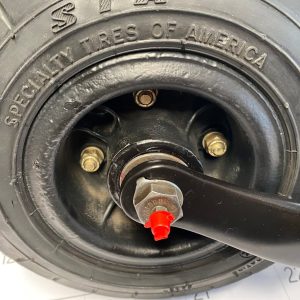
The Scott 3200A Tailwheel – Fully Rebuilt offers a dependable replacement option for suitable taildraggers requiring responsive steering, smooth swiveling, and reliable aircraft ground handling. Clear rebuild records help aircraft owners and maintenance professionals evaluate the tailwheel before installation.
A Scott 3200A Tailwheel Assembly can contribute to controlled taxiing, parking, takeoff alignment, landing rollout, and maneuvering in confined ramp areas. A Scott Tailwheel Assembly can develop wear through repeated taxi cycles, landings, vibration, dirt exposure, moisture, poor lubrication, incorrect alignment, or unsuitable adjustment.
The Aircraft Tailwheel Assembly carries tail loads while allowing the aircraft to taxi, turn, park, take off, and land on suitable surfaces. A properly maintained General Aviation Tailwheel can support predictable directional control and long-term serviceability.
Whether the requirement is an Aircraft Tailwheel, Taildragger Tailwheel, Aviation Tailwheel System, or Tailwheel Steering Assembly, exact compatibility should guide the purchase.
Key Benefits of a Rebuilt Scott 3200A
The assembly can respond to normal steering input while allowing broader movement when its internal mechanism releases appropriately. Maintenance personnel should inspect the complete tailwheel arrangement before concluding that one component is responsible for steering difficulty or shimmy.
Scott 3200A Tailwheel Applications
Suitable internal clearances and secure steering components contribute to consistent performance. Reusable parts may remain acceptable when they pass inspection, while worn or damaged components should be replaced appropriately.
Scott Tailwheel Assembly Service Quality
A thorough rebuild generally begins with complete disassembly, careful cleaning, detailed inspection, and measurement of wear-sensitive areas. Transparent rebuild information supports stronger commercial credibility and buyer confidence.
Aircraft Tailwheel Assembly Benefits
Tailwheel condition influences taxi tracking, turning ability, maneuverability, and pilot workload. Incorrect linkage tension can cause delayed steering, harsh engagement, restricted movement, or unnecessary component loading.
General Aviation Tailwheel Reliability
Grass, gravel, and dirt can introduce moisture, abrasive particles, vegetation, and debris into moving areas. Training aircraft may accumulate frequent taxi and landing cycles, while bush airplanes may experience greater surface irregularity and impact loading.
Benefits of an Aircraft Tailwheel
Its geometry, tire condition, fork alignment, steering arrangement, and internal condition can influence ground behavior. The tire should be inspected for cuts, flat spots, cracking, uneven wear, deterioration, contamination, and correct condition.
Taildragger Ground Handling
The Taildragger Tailwheel should be treated as an important ground-control component rather than a minor accessory. Taildragger operation may expose the assembly to side loads during crosswind taxiing, landing corrections, tight turns, and directional-control events.
Aviation Tailwheel System Inspection
A complete inspection helps avoid unnecessary replacement and repeated troubleshooting. Correct setup supports consistent Aviation Tailwheel System operation.
Maintaining a Tailwheel Steering Assembly
A Tailwheel Steering Assembly converts rudder-related input into directional movement during taxiing and low-speed ground operations. Steering arms should be inspected for bending, cracking, corrosion, elongated holes, and wear at attachment points.
Choosing a Ground Handling Tailwheel
Reliable ground handling begins with a serviceable assembly and a correctly adjusted installation. The tailwheel should not be used as an unsuitable lifting, pulling, or jacking point.
Maintaining Scott 3200 Series Components
Its established design supports servicing, adjustment, rebuilding, and parts replacement by knowledgeable aviation professionals. Buyers should verify markings, mounting dimensions, steering-arm arrangement, wheel configuration, and included components.
Maintaining a Heavy-Duty Aircraft Tailwheel
Rugged operations may involve gravel, grass, dirt, uneven surfaces, frequent cycles, contamination, and repeated loading. Durability depends on structural condition, bearing service, steering-spring integrity, wheel alignment, lubrication, tire condition, and correct installation.
Maintaining Tailwheel Components
Every component should match the intended Scott assembly and aircraft installation. Replacing only the most obvious damaged component may not correct the underlying issue.
Aircraft Steering Tailwheel Performance
Consistent steering can reduce unnecessary brake use and improve maneuverability in confined locations. Uneven tire wear may indicate alignment, bearing, or steering concerns.
Choosing a Replacement Aircraft Tailwheel
Aircraft records may reveal Aviation Tailwheel System previous modifications or approved changes that influence replacement selection. The replacement should be inspected after delivery for shipping damage, missing components, rough bearings, incorrect hardware, cracks, or visible defects.
Maintaining General Aviation Gear Components
A complete landing gear assessment may reveal concerns beyond the tailwheel itself. Transparent descriptions support trust among aircraft owners, sellers, and maintenance professionals.
Scott Tailwheel Condition Checklist
A pre-purchase inspection should confirm the assembly identity, rebuild scope, structural condition, included components, tire status, steering arrangement, and available documentation.
- Resolve identification, compatibility, and completeness questions before payment.
- Do not treat clean paint, fresh grease, or bright hardware as proof of a complete mechanical rebuild.
- Confirm the seller’s terms, written invoice, rebuild documents, payment protection, shipping insurance, packaging method, inspection period, and return conditions.
Commissioning a Rebuilt Scott 3200A
The aircraft should be supported safely while the existing assembly, tail spring, steering links, mounting bolts, and surrounding structure are inspected. Any unexpected behavior should be corrected before normal aircraft operation.
Pilots should report delayed steering, pulling, vibration, noise, binding, or irregular swivel behavior.
Scott Tailwheel Maintenance Guide
Preventive maintenance can identify wear before it develops into shimmy, binding, looseness, poor steering, or component damage. Recurring shimmy or unusual tire wear should be diagnosed rather than addressed through repeated adjustment without identifying the cause.
Hardware and moving areas should remain visible enough for inspection.
Selecting a Scott 3200A Tailwheel Assembly
When professionally inspected, installed, adjusted, tested, and maintained, the Scott 3200A Tailwheel – Fully Rebuilt can become a reliable component of a compatible conventional-gear aircraft. The strongest purchase decision begins with confirming model identity, rebuild scope, replaced components, retained parts, structural condition, tire status, steering arrangement, included hardware, and aircraft compatibility.
Whether the project involves an Aircraft Ground Handling Tailwheel, Scott 3200 Series Tailwheel, Heavy-Duty Aircraft Tailwheel, or Tailwheel Aircraft Parts, rebuild documentation should be reviewed carefully. With transparent rebuild records, secure mounting, serviceable steering components, and careful taxi testing, the Scott 3200A can support predictable ground handling.